Families and everyday users
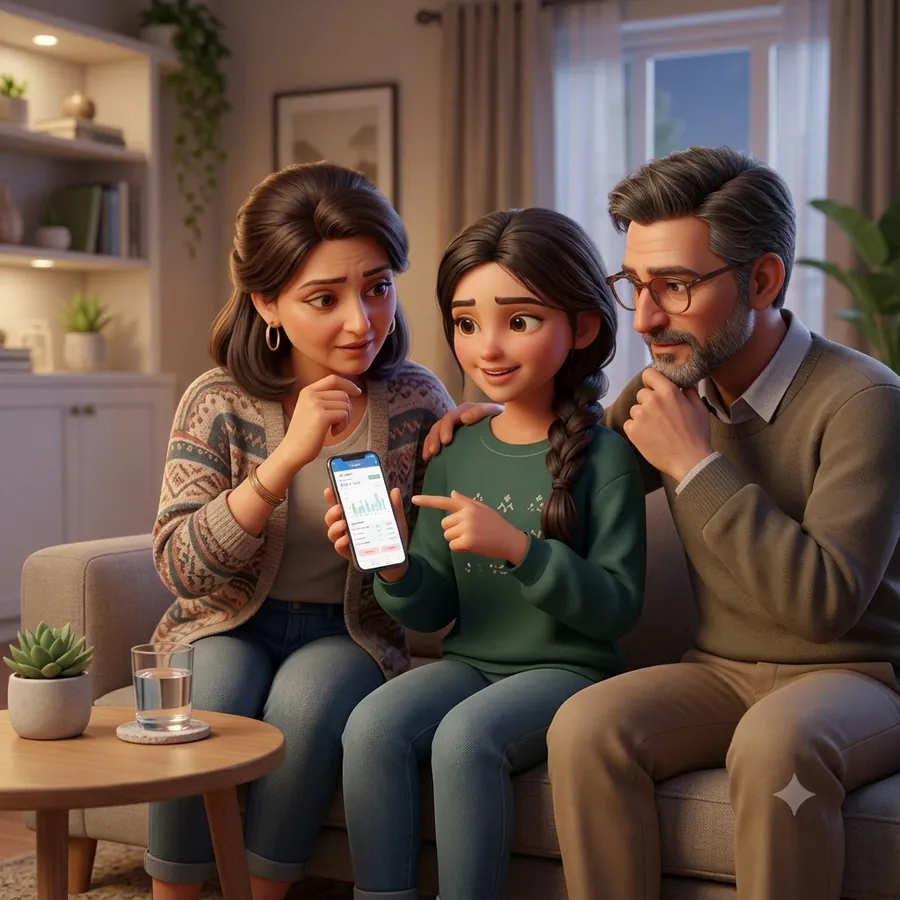
Got a report but the doctor is days away? Understand it first and walk in with better questions.
ASHAA looks at Indian guidance first (ICMR), then WHO, CDC and MedlinePlus, and shows the documents behind each answer. When a message sounds like an emergency, it stops and tells you to call 112 / 108.
 ASHAAEN · हि

I look things up before I answer, show the sources behind every answer, and tell you when I'm not sure. Ask me a question, or bring your report.
Built around Indian food, Indian guidance and Indian emergency numbers, yet anyone can use it.
Got a report but the doctor is days away? Understand it first and walk in with better questions.
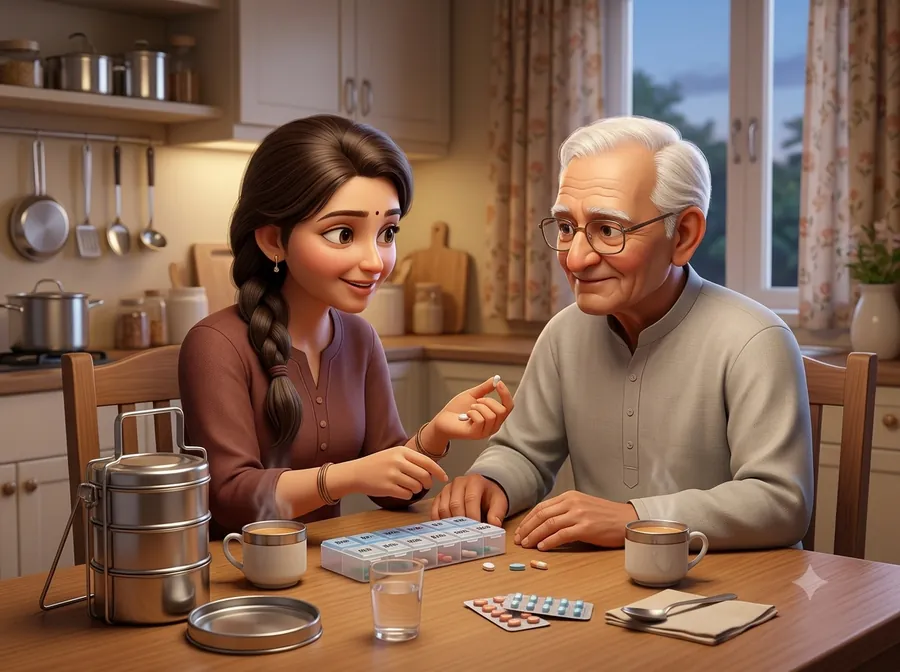
Looking after elders or children? Spot warning signs and call for help at the right time.
ASHAA reads Hindi and Hinglish messages and the emergency check runs on them too. Use the toggle at the top to switch this site.
Two helpers, one chat: one answers general health and nutrition questions, the other reads your lab report. Every answer comes with its sources.

ASHAA gives general health information, not a diagnosis. Your messages and any attached report are processed by an AI model to answer you. Reports are not stored, and chats are deleted after 30 days. In an emergency call 112 / 108.
Four steps, and at every step you can see what is happening.
Write in English, Hindi or Hinglish, and attach a lab report as a PDF or photo.
ICMR first, then WHO and CDC, then MedlinePlus. Every answer lists the documents it used.
Scores are demo values.
Every message passes an emergency check first. If it's flagged, ASHAA stops and shows the fixed 112 / 108 message.
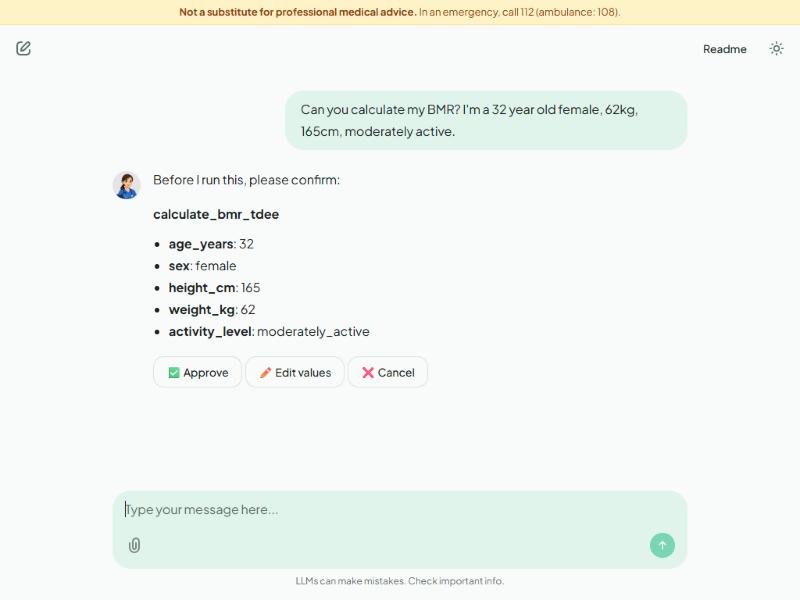
Each lab value is explained against its own reference range. Before a calculation like BMR, ASHAA shows the exact inputs: approve, edit or cancel.

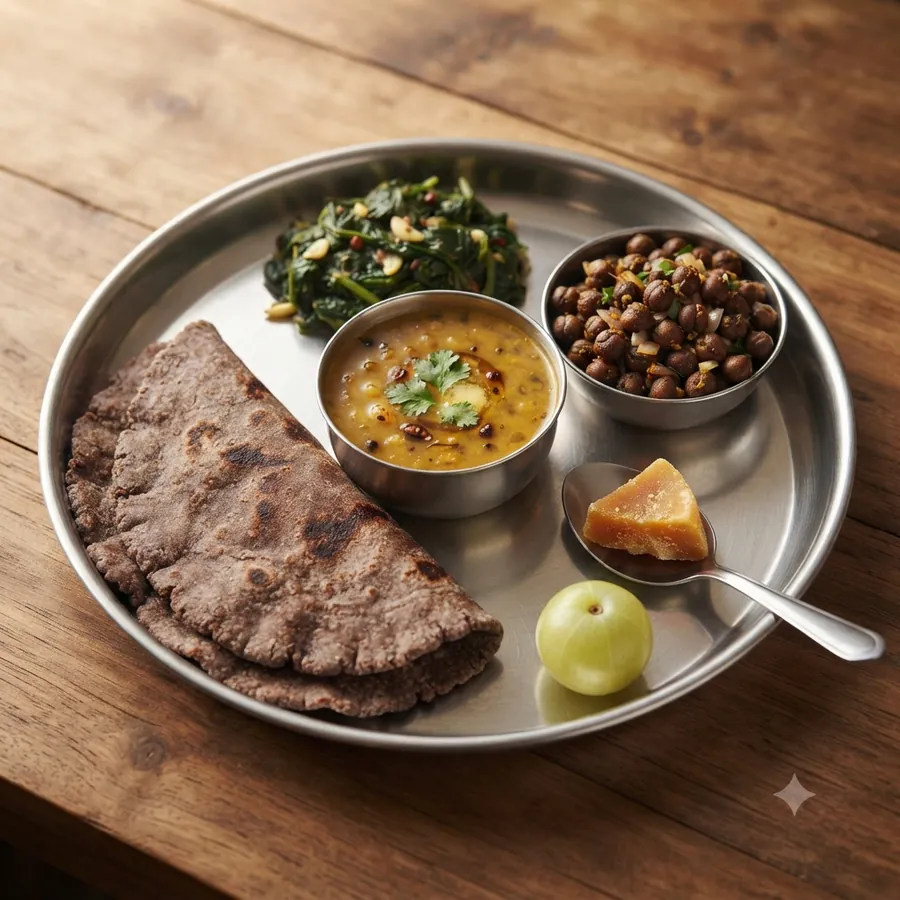
Ask about ragi, dal, palak, chana, jaggery or amla. Answers lean on ICMR-NIN guidance first, and the sources are shown with each one.
A demo with a fictional patient and made-up data. See how every claim carries its source, and what happens the moment a message sounds like an emergency.
ASHAA
Demo
Haemoglobin of 9.2 g/dL falls in WHO's “moderate” anaemia range for women. Iron deficiency is a common cause, but only further tests can confirm it.
What next?
Your message may point to something serious. Call 108 for an ambulance, or have someone take you to the nearest emergency department. Don't wait for an online answer, and don't drive yourself.
In the real ASHAA this path skips retrieval and shows nothing the model wrote. It is the same fixed message every time.
Haemoglobin is below range and fits the tiredness described.
Ask someone to stay with you, and be ready to give your address, phone number and symptoms.
Demonstration only: fictional patient, made-up data. The emergency trigger here is a simple keyword check; the real ASHAA runs a separate model-based guard on every message.
Many AI assistants sound confident. ASHAA shows where an answer came from, and stops guessing where the risk is high.
Every answer lists the documents it used: title, publisher, date and link. The answer text is grounded only in those documents.
Not enough evidence? ASHAA says it doesn't have sufficient medical information instead of guessing.
Every message passes an emergency check first. If it's flagged, retrieval is skipped and a fixed 112 / 108 message is shown.
The emergency check was tested on 469 synthetic cases. The numbers are encouraging, not a safety guarantee.
Recall 99.2% (95% interval 95.7–99.9%) on the frozen test half.
Only 3 of 9 without them, which is why ASHAA also reads your last three messages.
Both were “mild chest pain after the gym”. ASHAA is deliberately biased to flag.
Written by a smaller model and reviewed by the project owner, not a clinician. Hindi and Hinglish samples are small.
Yet online answers rarely say where they came from. And when something is serious, a chatbot should not be guessing.
So we built ASHAA: Indian guidance first, every answer sourced, and a hard stop when something sounds like an emergency. So every step makes sense.
| Source | Used for | Terms in short |
|---|---|---|
| ICMR / ICMR-NIN (India) | Tier 1 guidance and nutrition | Published for public information; reproduction with acknowledgement |
| WHO fact sheets | Tier 2 | CC BY-NC-SA 3.0 IGO |
| Indian vitamin D consensus (Kalra et al., IJEM, 2025) | Tier 2 | CC BY-NC-SA 4.0 |
| CDC | Tier 2 | US government work, generally public domain |
| MedlinePlus (US NLM) | Tier 3 | US government work, generally public domain |
Non-commercial demo. ASHAA is a portfolio project. Because some sources carry non-commercial licences, it must not be offered as a commercial service without permission from the rights holders.
Ask questions, read your reports, and see the sources behind every answer.
Try the demo again